evan grothjan
Emmy Award-Winning
Filmmaker & Journalist
Evan Grothjan's work reconstructs events that are obscured, disputed, or denied. He spent seven years at the New York Times, where his reporting earned two Pulitzer Prize finalist citations, an Emmy, and recognition from World Press Photo and the Society of News Design.
His work is held in the permanent collection of the Museum of Modern Art and has been exhibited at the Venice Architecture Biennale.
select work
From the late 1960s to the early 1980s, the Mexican government escalated an already brutal campaign against political dissidents during la Guerra Sucia, the “Dirty War.” This fourteen-minute video presents one of the first assemblages of visual evidence showing the systematic and highly organized program of disappearances carried out by key military officials in Guerrero, Mexico during this period.
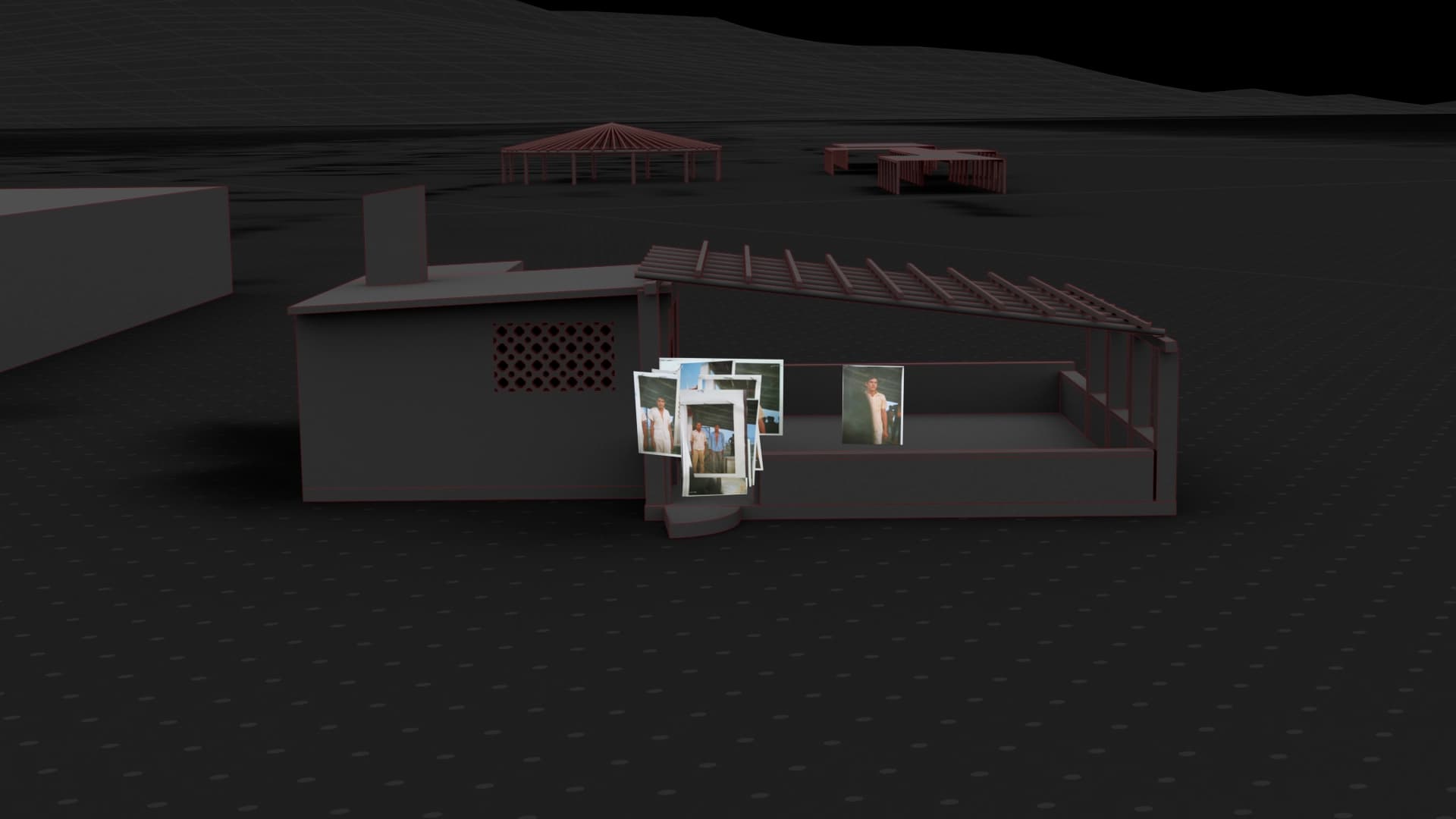
Documentary excerpt.
Weaving together open and closed-source research, a digital site model of the Pie de la Cuesta Air Force base — the primary scene of State abuse — was reconstructed from archival materials, declassified spy satellite imagery, and records from a 2002 military investigation. The analysis includes written testimonies from military personnel who described their active involvement in the disappearances, information from journalistic reports, and unexpected Hollywood film footage.
Declassified satellite imagery.
Widely circulated in Mexico, the film’s call to action demands the release of the full scope of the military’s archives to uncover additional aspects of the truth about this dark period of Mexican history.
Update: On August 7, 2024, a list of 183 purported victims of The Death Flights was released.
Between February and May 2022, the Russian military’s assault on the Ukrainian city of Mariupol left thousands of civilians dead or injured. Many were trapped for weeks without access to electricity, water, or medical care. The siege stands as one of the most devastating chapters of Russia’s full-scale invasion.
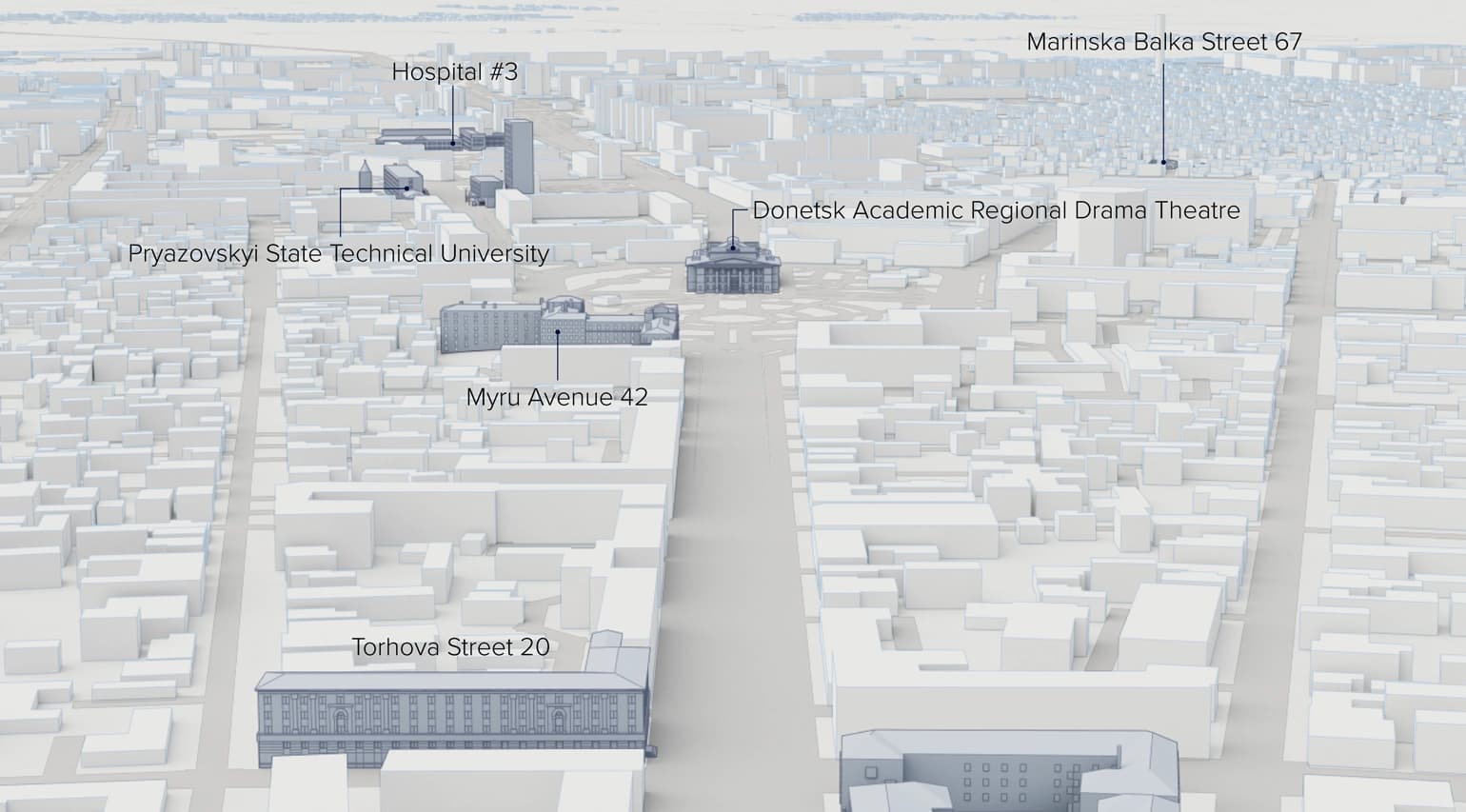
Mariupol reconstruction, view from Mytropolytska Street.
To document the destruction, Human Rights Watch produced a 215-page interactive report, a multimedia feature, and a 20-minute video. To render the scale of devastation legible, an estimated 93% of the city’s structures destroyed, HRW partnered with SITU Research, where I was part of the investigative team responsible for spatial analysis and visual reconstruction.
The investigation drew on more than 240 interviews with displaced residents, as well as satellite imagery and verified social media videos, collected in collaboration with HRW’s Digital Investigations Lab. Drawing on these sources, the team pursued a two-pronged approach: first, mapping citywide destruction through satellite analysis; second, reconstructing seven building-specific case studies to examine individual incidents.
Presentation at Harvard Law Clinic.
OpenStreetMap building footprints were downloaded, verified, and corrected to reflect pre-siege conditions, then cross-referenced with post-siege satellite imagery to identify damaged or destroyed structures.
This layered methodology integrating testimonial, spatial, and visual evidence produced a comprehensive digital record of the siege. Ultimately, the report calls for Russian President Vladimir Putin and senior officials to be investigated and prosecuted for war crimes, and urges reparations for victims and their families.
During the 2020 George Floyd protests in New York City, the NYPD responded to demonstrations with widespread use of force. The National Lawyers Guild filed a class-action lawsuit against the City of New York, and in discovery the NYPD produced more than 6,000 video files. The footage became the evidentiary backbone for four categories of constitutional violations: baton strikes, pepper spray, excessive force, and kettling.
Discovery materials.
On the investigative team, my focus was kettling: a crowd-control tactic in which officers surround protesters and restrict movement, and one of the hardest to prove. The NYPD denied using it. I started with helicopter footage because it reduces the crowd to forms and makes police geometry legible. Two events had aerial coverage. Mott Haven in the Bronx and the Manhattan Bridge. I produced a graphic analysis showing NYPD formations enclosing protesters under white-shirt commanding officers. Ground-level footage corroborated it in real time, with protesters saying they couldn’t get out.
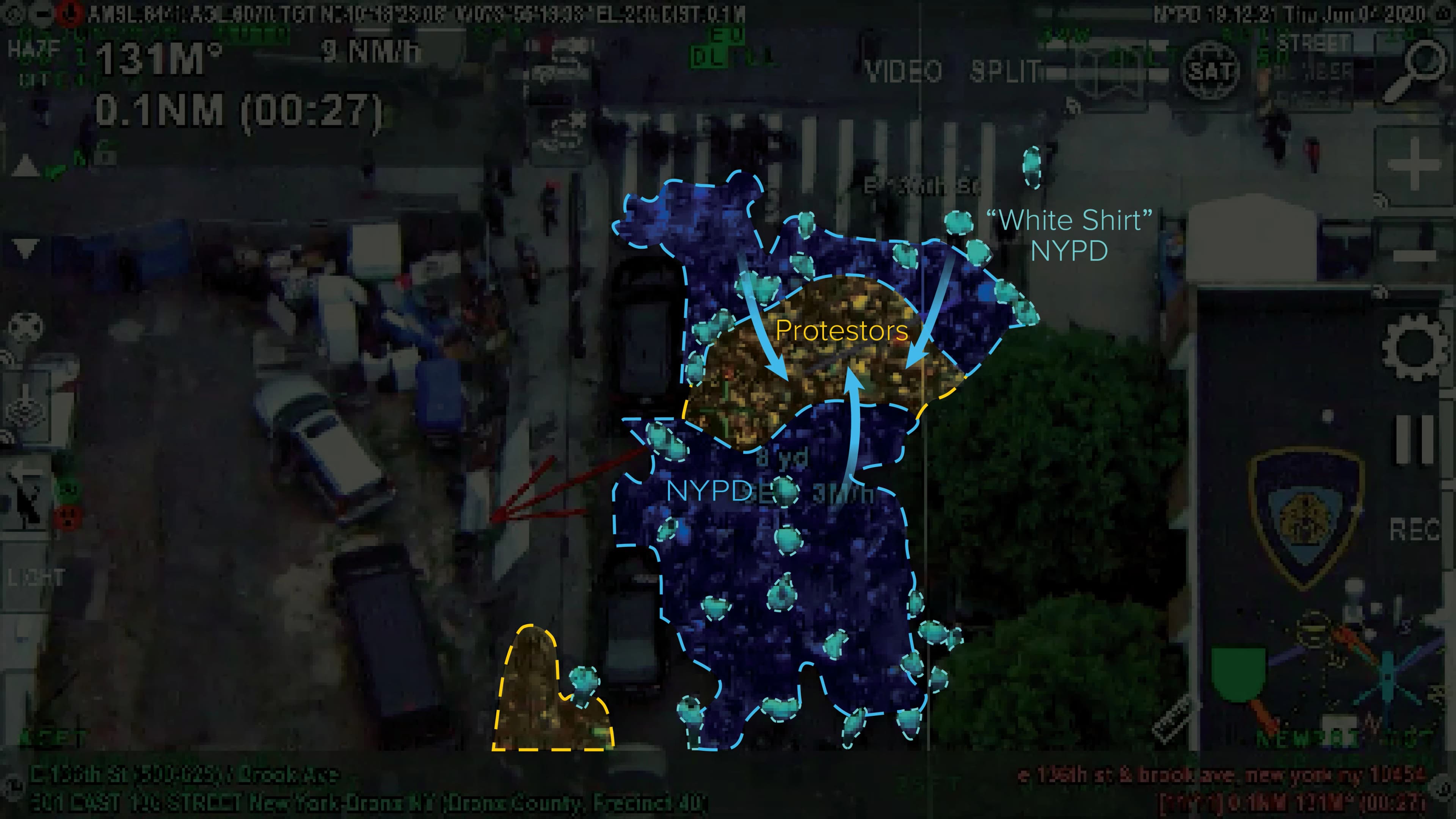
Helicopter footage.
Four additional kettling events lacked aerial coverage, so I built the record from the ground up. I reviewed hundreds of discovery videos, geolocated key clips, and assembled detailed case files for each event. To establish temporal context, I synchronized footage into four-channel sequences so multiple angles of a single moment could be viewed simultaneously. To establish spatial context, I built a digital twin of the city and geolocated each clip within the built environment.
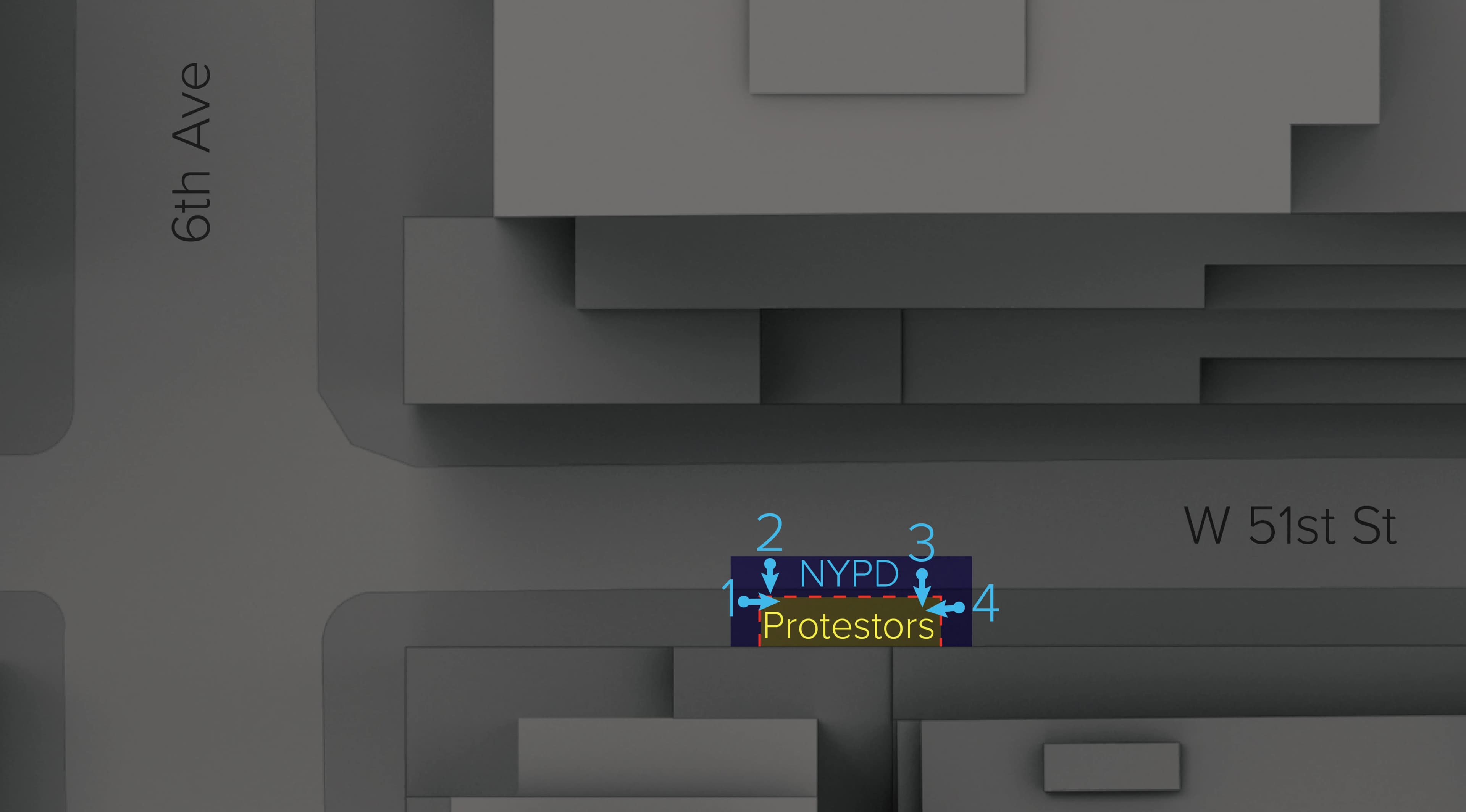
Excerpt of synchronized 4-channel video. Map for synchronization and geolocation.
Together, these materials show how officers coordinated formations, used streets and barriers to their advantage, and systematically eliminated exit routes to confine and kettle protesters.
The NYPD settled out of court.
On January 9, 2022, a fire in a Bronx high-rise claimed 17 lives. None of the victims died from burns. They died from smoke inhalation, many several floors above the apartment where the fire began. A New York Times investigation, grounded in floor plans, witness videos, 911 calls, and city records, traced the smoke’s path from ignition to containment. It revealed a building built before modern fire codes, without sprinklers or automatic fail-safes, reliant on a containment strategy that failed catastrophically.
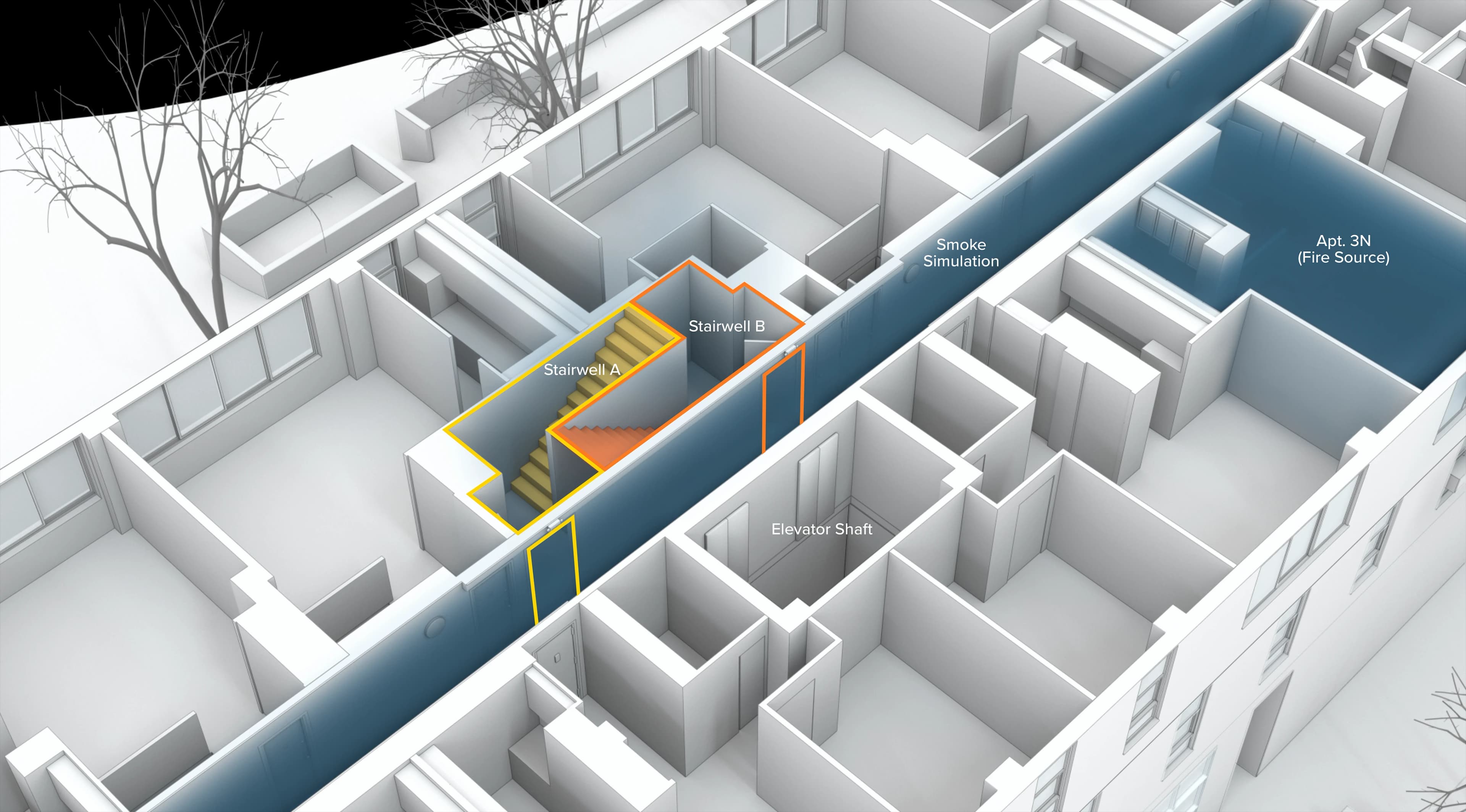
3D visualization of smoke spread throughout the building.
Early in my career at The Times, I began researching smoke simulations and how they could translate into reporting. I later applied that work on wildfire coverage, and that proof of concept opened the door to more advanced work, culminating in the Bronx fire. Working with fire engineering experts at Worcester Polytechnic Institute, Fire Dynamics Simulators modeled how smoke rapidly rose through stairwells, turning them into vertical chimneys. I led the integration of these outputs into a base 3D building model a colleague built from floor plans, verifying the results by cross-checking them against engineering analysis and our source material.
Interior.
From there, I reported out the visual story, untangling an event that unfolded across 19 stories by guiding readers floor by floor through a moment-by-moment reconstruction as conditions deteriorated. The result became the newsroom’s longest 3D visual, clarifying how smoke, not flames, drove the death toll. The project was later named a finalist for the 2023 Pulitzer Prize for Breaking News.
As part of a New York Times team investigating political and corporate negligence in major infrastructure failures, I reported on the 2021 Mexico City Metro collapse. The piece examined how the failure of an elevated section of Line 12 was rooted not in a single mistake, but in years of rushed construction, cost-cutting, and compromised oversight. It framed the disaster as both a structural failure and a political one.
Pyrocumulonimbus development over the Dixie Fire.
Drawing on internal documents, audit reports, expert analysis, and interviews with engineers, the investigation traced a pattern of missing components, poor concrete work, weak welds, and construction carried out without sufficient quality control. The reporting showed how pressure to build quickly shaped critical decisions from budgeting and design through certification and repair, leaving behind a system that had shown signs of distress almost from the beginning.
The project connected those technical findings to the broader human and political stakes of the collapse. It moved between forensic detail, public accountability, and the testimonies of survivors and families, showing how infrastructure failures are produced long before the moment of catastrophe, through the quieter accumulation of shortcuts, pressure, and neglect.
The Dixie Fire project reconstructs the moment a wildfire began generating its own weather. In July 2021, amid severe drought and extreme heat across the West, the fire produced towering pyrocumulonimbus clouds, lightning, and violent winds, becoming a self-intensifying atmospheric event rather than simply a burn perimeter on a map.
Pyrocumulonimbus development over the Dixie Fire.
Using high-resolution radar data, I helped build a 3D model of the fire’s first major thundercloud formation, transforming remote sensing data into a spatial, time-based visualization of extreme fire behavior. The smoke and cloud volumes were derived from radar reflectivity data, then processed and interpolated into a continuous sequence that preserved the structure of the underlying measurements while making the phenomenon visually legible.
Terrain, fire footprint, and lightning activity were layered from satellite imagery, elevation models, and active fire datasets to produce a unified reconstruction of a firestorm in motion. The piece aimed to show wildfire not as a static disaster image, but as a dynamic system capable of generating new atmospheric conditions at planetary scale.
McMurdo Station, the largest outpost in Antarctica, is operated by the National Science Foundation. The team traveled there on a media grant supporting science reporting in polar environments, working in collaboration with the Rosetta Project, a Columbia University-led initiative to map the subsurface structure of the Ross Ice Shelf. The reporting trip resulted in four stand-alone virtual reality films.
Under the Ross Ice Shelf.
Working with emerging technology meant relying on an experimental virtual reality camera rig, prototypes untested in extreme conditions, to capture the first virtual reality stereo footage ever recorded on the continent. Subzero temperatures, high winds, volcanic dust, and the presence of military aircraft posed constant operational challenges.
Transantarctic Mountains.
The primary rig was a ring of sixteen GoPro cameras powered by a shared 25-pound lithium battery pack, which had to be carried across ice and up mountainous terrain. Hand warmers were used to prolong battery life. The cameras did not share memory, requiring manual tracking and rotation of sixteen individual microSD cards. Failures were frequent. Card changes had to be performed by hand in subfreezing conditions.
Data visualizations of the shifting ice shelf were produced in-house. One of the four films would go on to win a World Press Photo Award.
Group Exhibitions
- MoMA, Full Disclosure: The Edge of Information Design
2027 - Prada Foundation, Venice Biennale, Diagrams
2025 - Architekturmuseum TUM, Visual Investigations
2024
Speaking
- RightsCon, Reconstructing History
2025 - Politecnico di Milano, Presentation
2024 - Columbia GSAPP, Guest Critic
2024 - Society of Professional Journalists, Panel
2023
Select Awards
- Pulitzer Finalist, Bronx Fire
2023 - SND Bronze, Bronx Fire
2023 - SND Silver, Dixie Fire
2022 - Emmy Winner, One Building, One Bomb
2019 - World Press Photo, Under a Cracked Sky
2018